
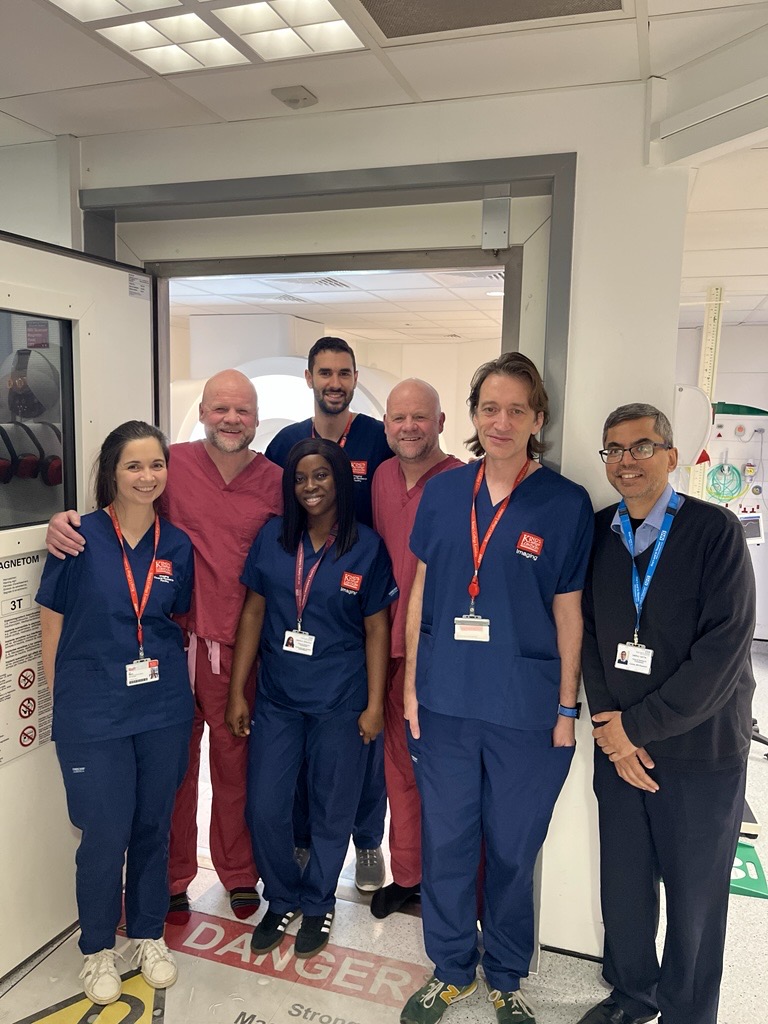
TwinsUK MRI study reaches major milestone with 1,000th twin scanned
18th December 2025 – by Aaruthy Suthahar
The TwinsUK MRI study has reached an exciting milestone, with the 1,000th twin now successfully scanned.
Recruitment for the study began in January 2024, and since then more than a thousand TwinsUK members have taken part in detailed MRI scans, contributing to one of the largest imaging efforts of its kind within a twin cohort. The study is a close collaboration between the Department of Twin Research and the BMEIS group. The study has been running smoothly and continues to be an enjoyable and rewarding project for everyone involved. With approximately 1,850 scans still to be completed, including selected repeat scans planned over the coming years, the study is now nearing the halfway point. The team remains well on track to deliver a rich imaging dataset that will support ageing research for many years to come.
Hearing from two of our milestone MRI participants
We spoke to David and Paul, the twin pair who marked this important milestone in the MRI study, to hear about their experience.
They described the visit as welcoming and well organised, highlighting how supportive the staff were throughout:
“Everyone was really professional and friendly, and they made us feel comfortable straight away. We knew exactly what to expect, which really helps. The whole experience felt very caring.”
Having both undergone MRI scans before, they found the process reassuring and straightforward:
“Some people worry about feeling claustrophobic, but the scanners were really good and the staff made sure we were comfortable the whole time. It was a very positive experience.”
When asked about fitting the visit around their schedules, the twins explained that while one found it easier due to being semi-retired, the other had to juggle a busier work schedule – but still found it worthwhile:
“For one of us it was easy to fit in, but for the other it’s a busy time at the moment. Still, it felt like a nice day off and a good excuse to come down to London and enjoy the sights.”
Their motivation for taking part reflects a strong commitment to contributing to research:
“We like helping out where we can. We’re both blood donors, so giving back feels important to us. When we saw the MRI study, we thought it was another way we could contribute. It’s also reassuring to see how things are health-wise, especially as we’re getting older -we turn 60 in March.”
They added that being part of the 1,000th scan felt special, and they’re keen to encourage others to take part:
“It’s nice to know we’ve played a small part, and we’re already trying to get other twins to sign up too.”
Behind the scenes in the scanner
Lucy, one of the radiographers involved in scanning TwinsUK participants, shared what has stood out most while working on the study:
She described how much she has enjoyed scanning twin participants, noting that what stands out most is their enthusiasm and positivity when taking part.
“The twins are always so happy to be involved in the study. They come in with a really positive demeanour, and you can see how much they encourage and support each other through the process. It’s lovely to meet siblings together and get a glimpse into their family life and how they interact as twins. They’re often very open about their day-to-day lives and their relationship with one another.”
She also had a reassuring message for any twins who might feel nervous about having an MRI scan:
“There’s really nothing to worry about. We’re set up to support participants at every stage. We’re always here to answer questions, and participants are fully in control of the experience. If they want to pause, stop, or ask something at any point, they can. Our role is to support them and make sure they feel comfortable throughout.”
Looking ahead
Professor Amedeo Chiribiri, Head of the Research Department of Cardiovascular Imaging and Principal Investigator of the TwinsUK MRI Study, said:
“Achieving 1000 scans marks a significant milestone for our team and for all those who have contributed. This achievement reflects not only the scale of the project but also the exceptional commitment of our volunteers – their involvement is truly indispensable. The data we are gathering will support scientific discovery for many years and help us deepen our understanding of ageing and the interplay between genetic and environmental influences.”
Professor Claire Steves, Director of TwinsUK, added:
“Reaching this milestone is a testament not only to the strength of our collaboration with the BMEIS group, but above all to the incredible commitment of our twins. They are consistently generous with their time, thoughtful in their engagement, and deeply motivated to contribute to research that benefits others. The MRI data adds a uniquely rich layer to the TwinsUK resource, helping us understand how genetics, lifestyle and environment shape health as we age – and none of this would be possible without our participants.”
The TwinsUK team would like to thank everyone who has taken part so far, as well as our imaging colleagues for their continued collaboration. We look forward to welcoming many more twins as the study continues.